
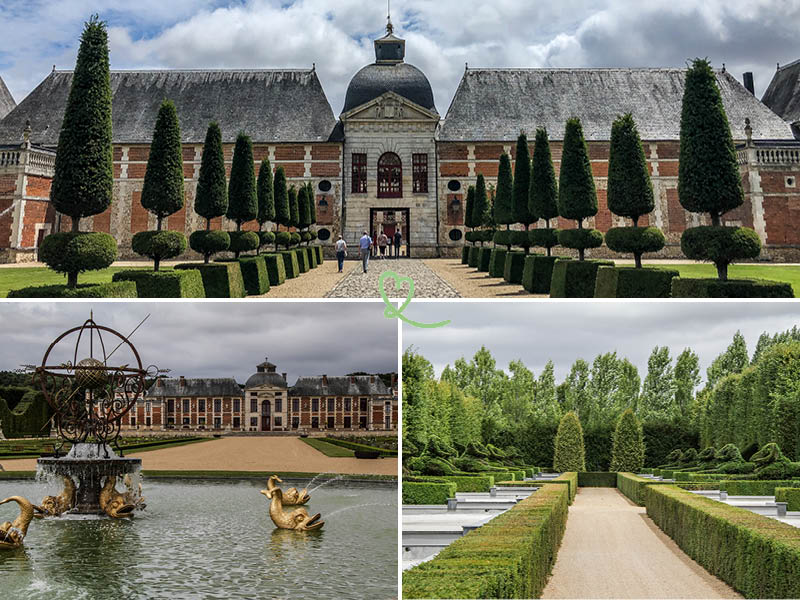
Visiting Eure? Don’t miss the Château du Champ de Bataille, one of Normandy’s most beautiful estates. Nestling in the heart of the Neubourg countryside, this 17th-century architectural masterpiece transports you to the sumptuous world of the Grand Siècle. We were impressed by the perfect harmony between the classical architecture and its spectacular gardens, veritable works of plant art.
In this article, you’ll find our photos and tips for making the most of your visit to the Château du Champ de Bataille.
This guide is completely independent, based on our experiences. We visited the region anonymously, making our own choices and paying our bills in full.
Why visit the Château du Champ de Bataille?
Is the Château du Champ de Bataille worth it? Our opinion:
The Château du Champ de Bataille is well worth a visit. Unfortunately, we couldn’t get inside, but we were captivated by the architectural harmony of this 17th-century jewel, and above all by its extraordinary gardens, which are among the most remarkable in Europe.
We were impressed by the scale of the estate, with its 45 hectares of carefully orchestrated gardens. We particularly appreciated the diversity of ambiences created, from boxwood lace to grandiose vistas. The restoration work carried out by Jacques Garcia since 1992 has restored the site to a splendor worthy of the greatest French estates. It’s one of the best activities in Normandy.

Why is the Château du Champ de Bataille famous?
The château owes its renown to its exemplary classical architecture and the fascinating story of its construction. Built in 1651 for Alexandre de Créqui, a companion of the Prince de Condé condemned to exile, it bears witness to a rebel’s desire to recreate the splendors of the royal court.
We discovered that the estate is also famous for its contemporary gardens created by decorator Jacques Garcia. They are inspired by a design by André Le Nôtre, while offering a unique contemporary vision. The château also houses exceptional collections of art and furniture, some of which come from royal collections.

Our favorite moments
Here are our three favorite moments during our visit:
- Discover the main courtyard, framed by the château and its imposing stables, a veritable architectural showcase where we admired the subtle interplay of brick, stone and slate.
- A stroll through the gardens, with their spectacular vistas, including the 550-meter-long grand canal known as “le Reflet”, which offers a magnificent view of the entire estate.
- Discover the Temple of Leda’s Treasure, with its ancient columns and semi-precious stones, a true evocation of ancient Greece in the heart of Normandy.

History in brief
The Château du Champ de Bataille traces an eventful history through the centuries. Here are the key dates we have selected:
- 1651: Alexandre de Créqui, a rebel exiled by Cardinal Mazarin, lays the first stone of the château. Work lasted until 1665.
- 1754: The château is acquired by Anne-François d’Harcourt, Marquis de Beuvron, who undertakes major embellishment work in the 18th century.
- 1795: Seized during the Revolution, the château was looted and then left unoccupied for several years.
- 1947: François-Charles, 11th Duke of Harcourt, buys the estate and embarks on an extensive restoration. He opened the château to the public in 1957.
- 1992: Jacques Garcia acquires the château and undertakes a spectacular restoration of the interiors and the creation of contemporary gardens.
- 1993-1999: Successive storms destroy some of the century-old trees, providing the opportunity to completely recreate the 45-hectare gardens.

WHERE TO STAY IN Normandy
We particularly appreciate staying in Normandy:
- Bayeux – our hotels selection
- Honfleur – our hotel selection

For more ideas, take a look at our article on the best places to stay in Normandy.
And if you already have an idea, take a look at our selections:
Access and map: Château du Champ de Bataille, Sainte-Opportune-du-Bosc
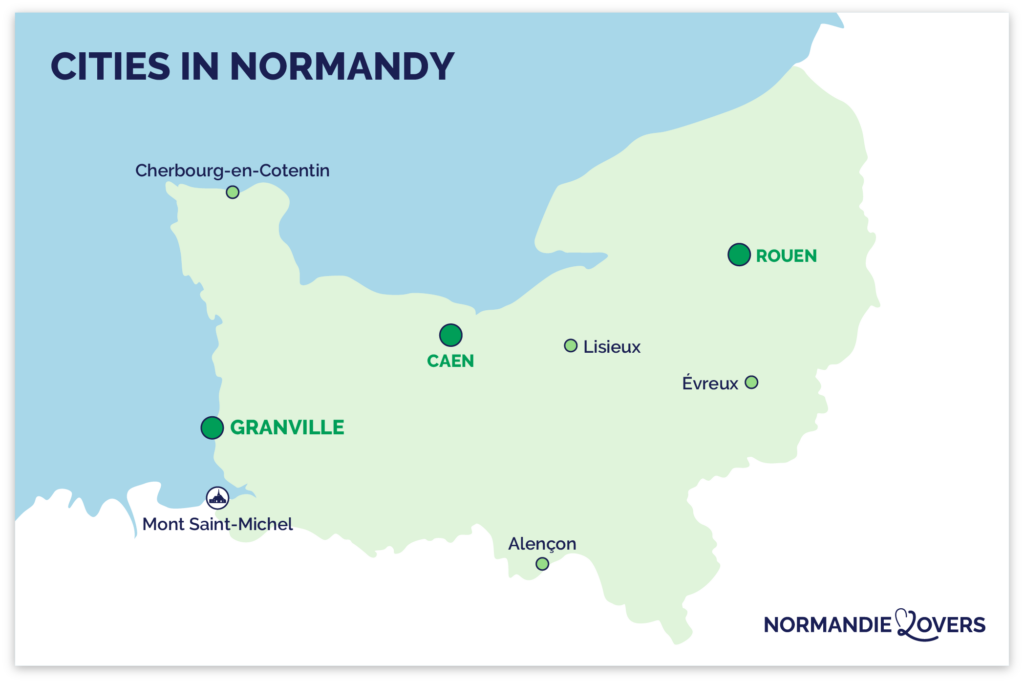
Where is the Château du Champ de Bataille?
- In the village of Sainte-Opportune-du-Bosc, in the heart of the Neubourg countryside
- Driving time from Le Neubourg: 5min
- Driving time from Évreux: 30min
- Driving time from Rouen: 40min
Here is a map to help you find your way:
How to get there?
There are several ways to reach the Château du Champ de Bataille:
- By car: This is the most convenient way to reach the estate. From Paris, take the A13 freeway towards Rouen, then follow signs for Le Neubourg. The château is located a few kilometers from the village. The route crosses the Normandy countryside without any particular difficulty.
- By train: The nearest SNCF station is in Évreux. From here, you can rent a car or take a cab to the castle in around 30 minutes. There are regular rail services from Paris Saint-Lazare to Évreux.
- By public transport: The local bus network serves Le Neubourg from Évreux, but timetables are limited. You’ll then need a cab for the last few kilometers to the castle.

OUR ADVICE FOR RENTING A CAR IN Normandy
- Compare prices on our preferred platform: DiscoverCars – one of the best rated sites.
- Choose a car that is comfortable enough (distances can be long) but compact (some parking lots and villages are narrow).
- Think of thecomplete insurance (some roads are tortuous and narrow).
- There is a lot of demand, book it early.
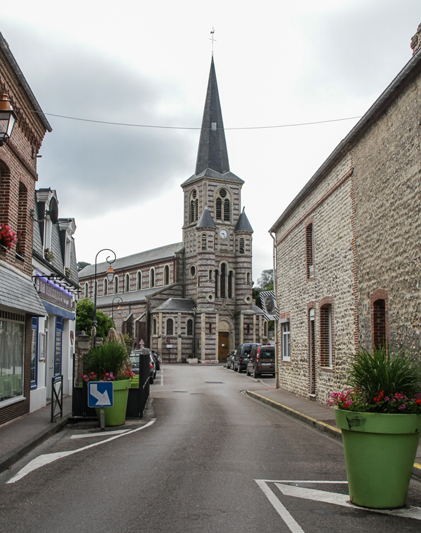

Parking
Ample free parking is available directly at the entrance to the estate. We found parking easy, even in high season. There are plenty of well-organized pitches to welcome visitors. You’ll park right next to the château entrance, making it easy to get to the site.

Useful tips: duration, schedules, eating…
Best time to visit
We advise you to visit between April and October to fully appreciate the splendor of the gardens. Spring brings spectacular blooms, while summer allows us to admire the gardens in all their majesty. Prefer a weekday visit to avoid weekend crowds.
We particularly enjoyed our visit in the morning, when the light gently caresses the château’s facades and the gardens awaken in a peaceful atmosphere. Late afternoons also offer great light for photographing the estate.

Length of visit and main difficulties
Allow at least 2h30 to 3h to explore the estate properly. This time will allow you to explore the gardens at your own pace and appreciate the different perspectives offered by the park. The immensity of the estate, with its 45 hectares of gardens, requires a good level of physical fitness for a complete tour.
We have found that the length of the routes can be tiring. The paths are mainly flat, although some areas feature steps, notably at the large waterfall. The site indicates that the château and part of the gardens are accessible to people with reduced mobility, although the size of the estate can present a challenge.

Advice on how to visit
We began our tour in the main courtyard to admire the exterior architecture of the château and its stables. We then headed for the gardens along the main axis leading to the Grande Terrasse. We continued on to the Dentelles de Buis and their green cabinets, bordered by the Bosquet de l’Érèbe on the right and the Bosquet de l’Éden on the left. From here, we reach the circular Source pool before exploring the various symbolic levels of the gardens.
Take time to discover the Temple of Leda’s Treasure and the Swan Water Feature. Then climb back up the water-lined path to the big waterfall and the Marches. The Anglo-Indian gardens with the Grotto of Cybele round off the visit. If you’re luckier than us, visit the interior of the château first, before enjoying the gardens.

USE OUR GUIDE TO PLAN A
DREAM TRIP TO Normandy
All the information you need for your trip:
- 8 maps that make planning easier
- 160+ pre-selected locations
- Practical advice
- 300+ photos to help you choose
Visiting with children
The Champ de Bataille gardens are a great family outing. They offer vast spaces where children can stretch their legs and discover nature at the same time. We’ve noticed that the diversity of the plant life and the numerous plants scattered around the park captivate the attention of the youngest visitors. The grand canal, fountains and animal sculptures dotted around the gardens arouse their curiosity.
The tour turns into a real treasure hunt, where together you’ll discover dolphins, black swans, golden frogs and sphinxes. The grand vistas allow children to run up and down the main aisles. Bear in mind, however, that the length of the route can be tiring for the little ones, so plan regular breaks.

Schedules and rates
- The château is open to visitors from April to November.
- Timetables vary according to the season, so we recommend that you consult the official website for exact times when you come.
- Admission to the gardens is usually around €15 for adults.
- Combined packages including a visit to the Grands Appartements are available at a higher price.
- Children benefit from reduced rates. Visit the official website for more info here.

Guided tours
We did not note the possibility of guided tours during our visit. However, they are likely to occur during the season. We therefore recommend that you check this information on the castle’s official website here before visiting.

Catering
- A tea room has been set up in the château’s outbuildings, offering you the chance to take a gourmet break during your visit. Here you can enjoy hot and cold drinks and pastries.
- If you fancy a more substantial meal, there are several restaurants in Le Neubourg, just a 5-minute drive away. The small town offers a number of good restaurants where you can discover Norman gastronomy.
- You can also bring a picnic lunch to enjoy in your car before or after your visit, as there is no picnic area on the estate.
- And why not treat yourself to one of the many tables we’ve selected in Normandy?

Subscribe to our Newsletter
- Get away from it all with Region Lovers’ beautiful destinations!
- Once a month
- Advertising-free

Classic architecture in the heart of Normandy
The Château du Champ de Bataille is a fine example of 17th-century architecture. Built between 1653 and 1665, it was commissioned by Alexandre de Créqui, an exiled nobleman who wanted to recreate the splendor of the royal court. We were seduced by the elegance of this complex, which stands majestically in the heart of the Normandy countryside.
A silhouette inspired by the Grand Siècle
As soon as you arrive, you’ll be struck by the castle’s original layout. Two large buildings face each other on either side of a vast main courtyard: the château on one side and the stables on the other. We admired this rare composition in which the two buildings have exactly the same architectural importance.
The stables, as imposing as the château itself, bear witness to the owner’s wealth in the 17th century. An elegant gallery links the two buildings on the entrance side, while a wall adorned with railings and punctuated by a beautiful gateway marks the passageway to the gardens. You’ll notice statues representing the four elements: earth, water, air and fire.

Elegant facades and remarkable symmetry
Take time to admire the castle’s facades. The two buildings are each 80m long, two storeys high and topped with a slate roof. We particularly appreciated the harmonious blend of red brick and white stone, typical of Normandy. In the center of each wing, a triangle decorated with military trophies recalls Alexandre de Créqui’s past as a soldier.
You’ll also see small towers at the corners of the building, reminiscent of fortified castles but serving mainly as decoration. On the façade overlooking the gardens, a series of busts of Roman emperors adorn the wall, demonstrating the owner’s culture and refinement. This decorative detail foreshadows what was to come later at Versailles.

An estate designed as a prestigious residence
Every element of the estate was designed to impress. The stables, as beautiful as the château itself, show just how much horses were a symbol of wealth and nobility in those days. We admired how the architects had given the outbuildings the same dignity as the main dwelling.
The chapel dedicated to Saint Alexander was added in 1785, harmoniously completing the ensemble. Although we weren’t able to visit the interior, a simple observation of the exterior volumes reveals the ambition of the project: to create a residence as beautiful as France’s greatest châteaux. A successful gamble for this gentleman exiled far from the royal court.

Spectacular gardens among the most beautiful in France
The gardens of Château du Champ de Bataille are an exceptional modern creation that rivals the greatest French gardens. In 1992, decorator Jacques Garcia created one of the largest private gardens in Europe, covering 45 hectares. We were impressed by the scale of the project: over a million m3 of earth moved, 60,000 box trees, 10,000 hornbeams, 35,000 yews and 20 fountains. These gardens are now protected and awarded the “Remarkable Garden” label.
A stroll through French gardens and Baroque inspirations
As soon as you step through the ornate door, you enter a fascinating world. The composition is inspired by an old drawing attributed to André Le Nôtre, Louis XIV’s famous gardener. We discovered that this precious document guided the creation of the boxwood lace and groves. But far from being a simple copy of the past, Jacques Garcia has imagined a symbolic journey in seven stages, from mineral to spirit.
You’ll walk through the Dentelles de Buis with their perfect geometric patterns, adorned with authentic 17th-century statues and vases. On either side, two opposing groves: the Bosquet de l’Érèbe with its wild vegetation representing original chaos, and the Bosquet de l’Éden with its ordered nature symbolizing purity. We appreciated this poetic vision, which transforms a stroll into a philosophical journey.

Grand perspectives and plant settings
Continue your tour to the circular Bassin de la Source, decorated with dolphins and topped by a 17th-century sphere. We loved the many little buildings dotted around the park: the Salamander Kiosk surrounded by rosebushes, the Ant Hill, and above all the beautiful Swan Pond where black swans glide. The Temple of Leda’s Treasure is a real favorite.
You’ll discover this ancient temple reconstructed with real ancient columns and stones from Rouen’s medieval walls. We were particularly impressed by the interior decorated with semi-precious stones. The “Way” then unfurls twelve levels of water, symbolizing humanity’s journey. Head for the Marches, a spectacular water staircase inspired by the one at Saint-Cloud.

An immersion in the art of European gardens
The route ends at the grand canal known as “le Reflet”, a 550m-long artificial lake. We savored this moment when the perspective opens up magnificently, offering a superb view of the entire estate with the château in the distance. At the far end stands an ancient column topped by a golden ball decorated with four heads blowing the wind.
Since our visit, new Anglo-Indian gardens have been opened to the public in June 2023. These English-style gardens, planted with 1,800 rhododendrons and flowers, create a romantic, natural atmosphere, very different from the French gardens. Here you can discover the circular Grotte de Cybèle, decorated with copies of ancient statues and reminiscent of 18th-century park grottoes. The estate is also home to an 18th-century Indian palace reassembled stone by stone around a lake, but this part is only open to the public during Heritage Days.

Frequently asked questions
Can the tour be enjoyed even without access to the interior lounges?
We can testify that visiting the gardens and discovering the castle’s exterior architecture is an exceptional experience in itself. The 45 hectares of gardens offer a spectacular walk through a variety of plant life. The vastness of the perspectives, the richness of the statuary, the fabriques scattered throughout the park and the beauty of the ponds and fountains create a complete and fascinating tour.
The magnificence of the château’s facades, as seen from the main courtyard and gardens, is also a testament to the architectural genius of the 17th century. An exclusive visit to the gardens is an enriching cultural outing that fully justifies the trip to Château du Champ de Bataille.

Can we compare these gardens to those at Versailles?
Although the Champ de Bataille gardens are part of the French garden tradition, of which Versailles remains the archetypal example, they offer a resolutely different, contemporary approach. Versailles bears precious historical witness to the 17th-century gardens designed by André Le Nôtre, while Champ de Bataille represents a 21st-century creation that reinvents this tradition.
We appreciated how Jacques Garcia was able to combine respect for classical codes with a creative freedom that makes these gardens an original work of art. The symbolic dimension of the seven degrees of creation, the integration of authentic antique architectural elements and the diversity of plant atmospheres give the Champ de Bataille its own identity.

PLAN YOUR TRIP TO Normandy
Inspiration destinations
- Deciding where to go in Normandy – the best destinations
- Our weekend ideas: best-of, romantic, unusual, seaside, luxury, family
- 16 seaside hotels in Normandy
- The most beautiful charming hotels in Normandy

Best of

Practice
- Where to stay in Normandy – best places and hotels
- See our tips for renting a car at CDG airport, Orly airport, Beauvais airport, Caen, Rouen, Bayeux…